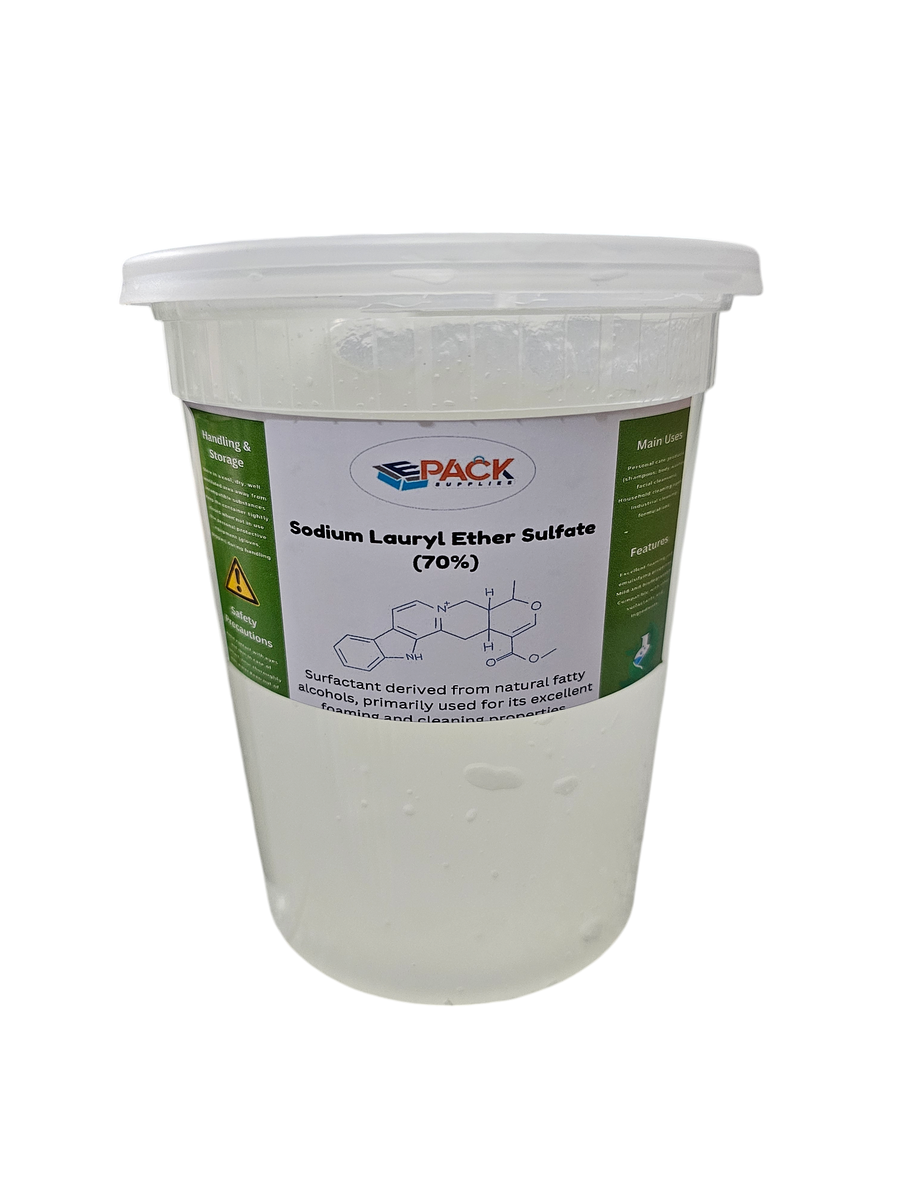
Sodium Lauryl Ether Sulfate 70% (SLES)
Sodium Lauryl Ether Sulfate (SLES) is a surfactant commonly used in personal care and cleaning products.
When formulated appropriately, it can provide certain benefits in cosmetic products, though it is primarily known for its cleansing and foaming properties rather than direct cosmetic benefits.
Here are some potential cosmetic benefits associated with SLES (particularly at 70% concentration as a raw material):
Cosmetic Benefits of Sodium Lauryl Ether Sulfate (70%)
Effective Cleansing
SLES is a strong surfactant that effectively removes dirt, oil, and impurities from the skin and hair, leaving a clean feeling.
Rich Foaming Action
It produces a dense, stable foam, which enhances the sensory experience and consumer perception of cleanliness in products like shampoos, body washes, and facial cleansers.
Improved Product Texture
SLES helps create a smooth, creamy lather, contributing to a pleasant application experience.
Enhancement of Other Ingredients
As a surfactant, SLES can help disperse and solubilize other ingredients, ensuring uniform distribution and stability of formulations.
Cost-Effective
Due to its high foaming efficiency, products formulated with SLES can achieve desired foaming and cleansing properties at lower concentrations, making formulations economical.
Considerations
While SLES offers these benefits, it is important to note that it can also cause irritation or dryness in some individuals, especially at higher concentrations or with frequent use. Many cosmetic formulators combine SLES with skin-conditioning agents or use milder surfactants to mitigate potential irritation.
Summary
Primary Benefits: Effective cleansing, rich foam, pleasant sensory experience.
Secondary Benefits: Enhances formulation stability and disperses other ingredients efficiently.
Note: The raw material concentration (70%) refers to the active surfactant content; formulation adjustments are necessary to optimize benefits and minimize potential adverse effects.